


Post Hot Topics
October 2025 – Breast Cancer Awareness Month

This month’s Hot Topic makes frequent reference to the gender-neutral term “breast,” used to describe the area of the body extending from the rib cage to the collarbone and beneath the armpits. Reader discretion is advised, but please remember to:
Last October, we reflected on Stoptober and the power of making healthier choices. Together, we explored how quitting smoking can lower the risk of cancer and support overall well-being. This October is the perfect time to dust off the cobwebs of those conversations, as we continue in the same spirit with another important campaign that many may already be familiar with: Breast Cancer Awareness Month.
Cancer, in any form, can be a daunting experience that brings forth feelings of hopelessness, uncertainty, fear, and countless questions, which can feel overwhelming for both those affected and their loved ones. ”
All cancers are complex, life-altering, and worthy of awareness. So why the particular emphasis on breast cancer? The answer is simple: it is one of the most commonly diagnosed cancers worldwide.
In the UK alone, it is estimated that:
- A woman is diagnosed with breast cancer every 9 minutes
- A man is diagnosed with breast cancer every day
Each year, this amounts to over 55,000 women and 400 men, according to Breast Cancer Now, the UK’s largest breast cancer charity, which funds research and provides life-changing support for those affected.
As October approaches, Pink October, as it is sometimes called, provides opportunities to educate, raise awareness and continue to develop a sense of community for those at risk and affected by breast cancer. From the simple act of wearing an iconic pink ribbon in solidarity, to playful fundraisers featuring decorated pumpkins and cheeky slogans like “check your pumpkins” to raise awareness on the importance of early detection, support and research.
In a healthy human body, cells grow, divide, and die in a regulated manner, continually helping to maintain balance. Cancer occurs when this regulation fails, causing cells to continue growing abnormally and not dying when they should.
Cancers typically begin when mutations occur in a cell’s DNA. Various factors, such as smoking, radiation, certain chemicals, or those inherited from family members, can trigger these mutations. Cancer can originate almost anywhere in the body, regardless of gender.
When it comes to cancer of the breast, these often occur in the chest area, specifically within the milk ducts or lobules that are a part of the breast’s glandular system. As cancer cells grow out of control, they can go on to form tumours that can invade the surrounding breast tissue. Over time, these cancer cells may spread in two main ways:
- Through the lymphatic system: Cancer cells can enter lymph vessels, which help transport a clear fluid called lymph that helps the body fight infections. Once these cells enter the lymphatic system, they may be carried by lymph and enter other lymph nodes around the body, such as the axillary nodes located in the armpit.
- Through the bloodstream: Similarly, cancer cells can infiltrate nearby blood vessels, allowing them to easily spread to other parts of the body, including vital organs and bones.
Fortunately, early forms of breast cancer, such as ductal carcinoma in situ (DCIS), are usually contained and have not spread into the surrounding breast tissue. These non-invasive cancers can be effectively treated and monitored to reduce the risk of progression. Certain conditions, like lobular carcinoma in situ (LCIS) or atypical hyperplasia, may increase the risk of developing invasive breast cancer later on in life.
Still, with regular screening and appropriate care, many cases can be managed before they become problematic.
While not all lumps are cancerous, any new or unusual changes in the breast should always be checked by a healthcare professional.
Most of the time, yes. One of the most effective ways to notice early signs of breast cancer is simply by being familiar with the way your chest and underarm areas usually look and feel. This can be done at home and does not require a mandatory formal exam every day. Often, even just paying attention during everyday moments (such as getting dressed or taking a shower) can be beneficial.
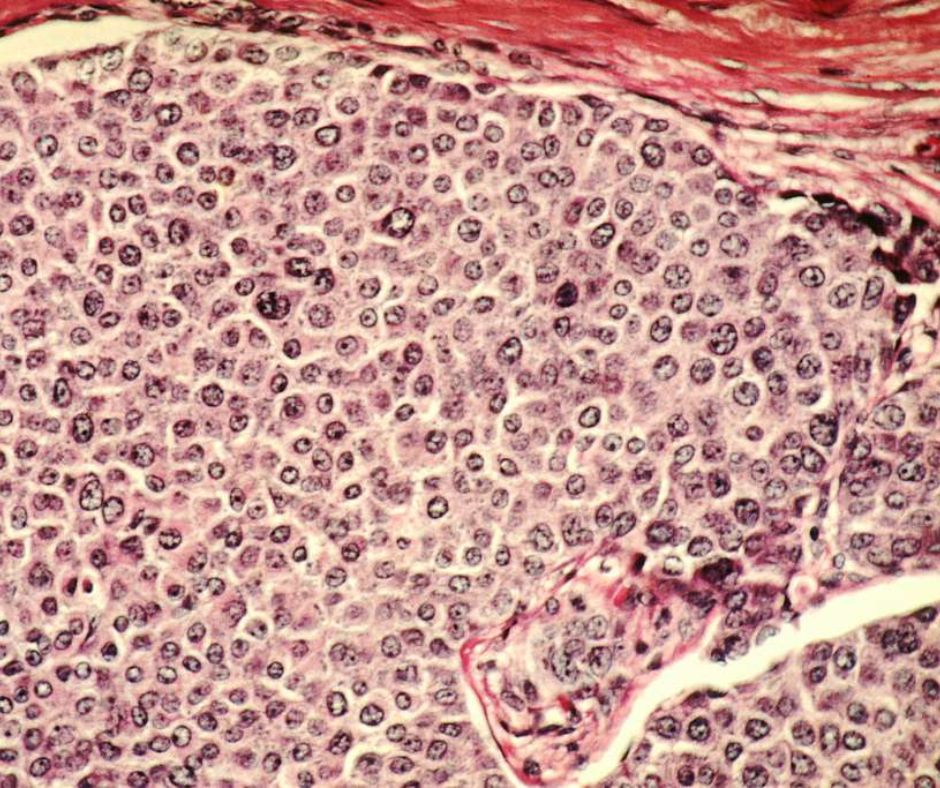
Just as one inspects their skin for moles, it is essential to regularly check your chest and underarms for any changes. Pay attention to alterations like changes in the size or appearance of your nipples and breasts. Even if the process feels awkward, insignificant or challenging to discuss, consulting your doctor will not be a waste of time and may, at the very least, provide reassurance.
It is also worth noting that women between the ages of 50-70 and registered as female are automatically invited to breast screening. Still, it is possible to make arrangements if you identify as male, transgender, non-binary or any other gender (such as a male at birth who is undergoing feminising hormone therapy).
Regardless of screening eligibility, it is still advised to do a self-exam from time to time in case something changes up, as other factors may be at play (such as hormone imbalances) that can help pinpoint rarer types.
No two chests are the same, so it is hard to say for sure what is “normal” for everyone, which is why it is essential to be aware of abnormalities, including:
- A new lump or thickened area in the breast or underarm
- Changes in the size, shape, or appearance of a breast
- Dimpling, puckering, or changes in the texture of the skin
- Redness, rash, or swelling that does not go away
- Nipple changes (such as inversion, discharge or pain)
- Persistent pain in one area of the breast
It is okay to take pride in one’s appearance, as the loss of self is often the first “silly” worry that often comes to mind. While treatments are getting better, unfortunately, we are not quite there yet.
As of right now, nobody can predict with certainty, if another person will lose their breasts to cancer, since the outcome depends on many factors: whether cancer ever develops, how early it is found, the type of cancer, and which treatments are recommended or chosen.
The gravity of the situation is that breast loss is not inevitable. Even when it does happen, it does not diminish a person’s strength, worth or vanity since many survivors embrace and accept the unfortunate trade that is sometimes made. Sometimes, scars can be beautiful in the sense that survivors openly take pride in making others aware and inspiring those who feel as though they have lost their sense of identity.

Many different tools and treatments fit into this:
- Mammogram – Often described as putting your breasts in a vice, this involves an X-ray screening that detects most tumours before they are visible. It involves gently sandwiching a breast between two flat plates to spread out the tissues, allowing a machine to obtain a clear picture.
- Lumpectomy – Surgery which only removes the cancerous lump and a small margin of tissue that allows most of the breast to remain.
- Mastectomy – Surgery that targets one or both breasts, which can be necessary for larger cancers or if an individual chooses it as a preventative measure due to having a higher risk of cancer. Many people who undergo a mastectomy may opt for reconstruction or live without it.
- Chemotherapy – Sometimes called chemo, this treatment uses strong medicines in cycles to kill rapidly growing cells. While effective, it can also affect some healthy cells that grow quickly, such as those in hair follicles, which can lead to hair loss.
- Radiotherapy – A high-energy beam aimed at the breast or chest area to destroy lingering cancer cells that remain after a lumpectomy or mastectomy.
While the pink ribbon is often the most well-recognised (and sometimes controversial) symbol used to show support, one must wonder why it came to be and why it has become synonymous with breast cancer.
Ribbons have long been symbols of hope and stretches just as long as a spool of the stuff. In the late 1970s, a woman named Penny Laingen tied a yellow ribbon to oak trees in her front garden after becoming inspired by a song called “Tie a Yellow Ribbon Round the Ole Oak Tree”.
While the lyrics of the song itself are all about a prison inmate asking his wife to tie a ribbon as a testament to her love, Penelope was inspired to do just that as a sign of devotion during the Iran hostage crisis, where her husband was the highest-ranking official held in captivity for 444 days. Hoping that he would one day return to her and channelling her emotions into the reminder, this bright ribbon eventually caught on to honour soldiers returning home, prisoners of war and those missing in action.
By the early 1990s, the ribbon had evolved into a powerful symbol during the height of the AIDS epidemic, when a collective of New York artists, known as the Visual AIDS Artist Caucus, launched “The Ribbon Project” to show support, as it was easy to replicate and wear. The original instructions were to cut a ribbon and fold the top into a V shape, with the bottom of the V facing upwards – just like a drop of blood.
This then set the stage for other health causes to follow the flow of a ribbon. Charlotte Haley, a woman whose family had been deeply affected by breast cancer, made peach-coloured loops by hand in her dining room and attached them to postcards to hand out at her local supermarket as a call for more funding towards prevention research.
She eventually caught the eyes of a few who worked for Self magazine and Estée Lauder, who approached her to collaborate without any strings attached. Her response was rather blunt: she did not want anything to do with them, and she felt they were both too commercial.
The companies, keen to move forward, consulted with lawyers and were advised to choose another colour – pink. The pink was marketed to signify all things chic, pretty and healthy, becoming an instant hit across most department store beauty counters across America. The thread does not end there, though. With the backing of major charities like the Susan G. Komen Foundation, which hosted Race for the Cure, pink ribbons eventually helped establish October as Breast Cancer Awareness Month worldwide.
While a coloured ribbon is instantly recognisable, it is not the colour that carries meaning, though for breast cancer it is often embraced in many different shades, such as:
- Light pink for general awareness and solidarity
- Hot pink to celebrate survival and life after diagnosis
- Pink and blue for male breast cancer
- Teal and pink represent metastatic breast cancer (often overlooked and occurs at a later stage)
- Pink with black to honour those who have lost their lives
Ultimately, it is the loop in the middle that forms an unbroken circle. A circle of hope, remembrance, research and resilience.
- Does encouraging regular self-checkups empower people or cause unnecessary worry?
- How do we balance community solidarity with individual choices?
- What other awareness ribbons do you recognise/support?
- Should more be done to teach self-examination techniques, or does that become an invasion of privacy?
- Would screening be better if they were redesigned?
Related Content
Post Hot Topics
March 2026 – Neurodiversity Celebration Week
04th March 2026
5 mins read
Post Hot Topics
February 2026 – Safer Internet Day
01st February 2026
7 mins read
Post Hot Topics
January 2026 – A Long December
01st January 2026
6 mins read