


Satellites are rather neat. They support daily essentials, from streaming shows to GPS navigation. But their value spans far beyond conveniences: satellites spot fires in California, track flooding in Bangladesh, and measure Beijing’s air quality. They are a product of human ingenuity, yet even they have limitations in what they can see from above.
The first flaw is that satellites can only take clear pictures when they happen to be in the right place at the right time, and their cameras cannot always pierce through clouds or haze. Most importantly, even the best images that tell part of a story can only show what is caught on the surface, not what might lie deeper beneath. Experts can study these images to gain important insights, but, as with a selfie taken by the sea from an idyllic vantage point, the image is only a visible snippet of what was captured the moment the shutter went off.
With this in mind, consider a landfill site. Does it merely contain typical waste, or could hidden pockets of gas be forming, awaiting a stray spark from a discarded battery? What if the landfill site itself sits atop old building scraps and forgotten medical refuse like some litter leviathan, primed to retaliate by hurling asbestos fibres and clinical leftovers nearby in its wake? Of course, this is slight hyperbole, but the point still stands: No matter the type of satellite — be it orbital, thermal, or radio — they can only see things at face value as they drift on by.
Then mix in the additional complications of the seasons. Spring, for instance, is a season that feels safe and full of change. The skies clear, everything brightens, and wildlife emerges. Yet the fairytale narrative that “nature is healing” often masks deeper issues or worsening problems, as though they magically vanish.
However, before we discuss this year’s theme and confront real examples, it would be beneficial to revisit the roots of Earth Day.
The Roots Of Earth Day
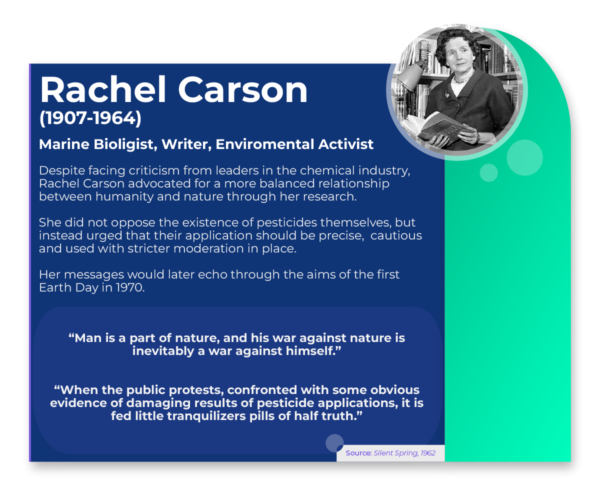
By the 1950s and 1960s, the effects on the environment became too apparent to ignore. Big cities around the world endured severe smog that made it hard to see, and many people became sick from respiratory problems. Things became so bad that some rivers even caught fire due to oil and factory waste. This was considered a tolerable price for economic growth, and warnings from those who researched wildlife. Notably, Rachel Carson’s 1962 book titled Silent Spring, which examined the dangers of pesticides and pollution, was often ignored.
So few people acknowledged the gruesome sights as battalions of dead animals floating on the bubbling slurries, yet many people warned of the dangers for the unlucky individuals who found themselves inside.
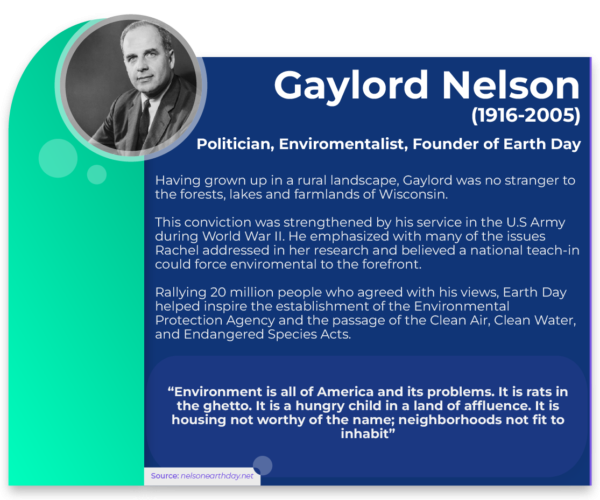
Jumping back to the present, this is why the 2026 Earth Day theme feels timely: it is all about “Our Power, Our Planet”. It calls for the here and now, shifting action away from passive awareness and towards active responsibility. While the causes are vast, the power to address them comes only when everybody bands together.
Here in the UK, this is evident in Birmingham, where existing systems have been struggling to keep up since January of last year. Residents often go to great lengths to sort their recycling as the city struggles with overflowing bins and periodic collection strikes that have been ongoing since January of last year. Months of uncollected rubbish, disrupted collections, and prolonged negotiations that drag on can make the most conscientious efforts feel hopeless.
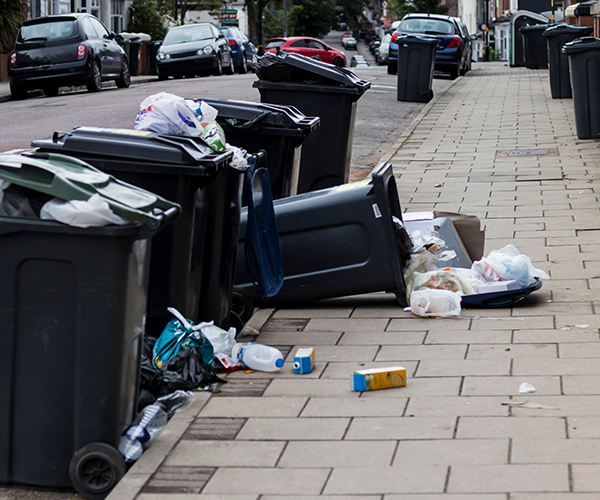
This demotivation then widens the gap further between intended practices and actual behaviour. Recycling that could be separated becomes contaminated and unfit for reuse. Waste intended for proper processing is rerouted elsewhere. Roads and pathways become makeshift dumping grounds that attract wildlife out of their usual comfort zones into places that are neither suitable nor sustainable for their survival.
Cape Town, South Africa
City services and prolonged water shortages force residents to improvise sanitation and recycling measures. Despite community efforts, contamination and mismanaged waste remain widespread, showing how infrastructure gaps can undermine good intentions.
In the Western Cape, landfill capacity is rapidly diminishing, with an estimated 5 years of capacity remaining across Vissershok, Mossel Bay and Gansbaii landfills.
To help address this, a Material Recovery Facility (MRF) opened in the city on the 10th of March, immediately beginning processing 25 tonnes of mixed recyclables per day. It has already created 50 jobs for Capetonians and is expected to grow to around 160 once fully operational.
While this will not resolve the existing water shortages overnight, it will help in the long run by reducing the strain on wastewater systems, limiting waste-related flooding and lowering the risk of landfill fires that can contaminate nearby water sources with ash and toxins.
The success of the MRF will depend on residents’ consistent engagement in separating their waste and on the consistency of collection systems.
Manila, Phillippines
In Manila, many residents operate outside normalised waste systems because collection services can be inconsistent in densely populated areas. With limited income, most individuals salvage waste outside of official services to recycle, reuse and sell just to get by.
Materials like plastic, paper, and metal waste are collected from streets, markets, and dumps, forming an informal underbelly network that both supports livelihoods and reduces visible waste. Unfortunately, without a consistent infrastructure to sustain these efforts, most discarded materials end up in canals and drainage systems, which can form blockages, cause flooding, and pollute water.
The community effort exists amidst strife, but because of flaws in the existing system, the support needed to back up these efforts, which are driven by desperation, is slow to come.
It is not just materials that are on the table when it comes to salvaging – literally. Some neighbourhoods find leftover food, clean it to the best of their ability, and cook it with vegetables into meals known as pagpag, a Tagalog term meaning “to shake off” dirt.
While some may joke about the “five-second rule” where dropped food is briefly edible, here the comparison becomes grim. No countdown, no margin for error and no real alternatives. In this context, pagpag is not simply a cultural practice, but a survival strategy—where the need for sustenance outweighs the known health risks.
Los Angeles, USA
In Los Angeles, formal systems for waste management and sanitation do exist, but the challenge lies in inconsistency: rules and guidelines are in place, but not always followed or sustained.
A recent community cleanup at MacArthur Park on the 1st of March helps illustrate this tension. City officials, including the mayor and a councilmember, helped volunteers to remove litter, abandoned tents and drug-related debris in what was seen as a successful cleanup. Residents were thrilled to see the park’s transformation.
This makeover was short-lived. One week was all it took for the park to look nearly the same as it had before the cleanup.
This community cleanup demonstrated that the willpower to act out of passion is there, and how many hands can easily make light work when working together. One-off cleanups can reset the clock, but cannot stop it from running if other issues, like the reasons the encampments started to reappear (such as homelessness and public health), remain.
Delhi, India + Rio de Janeiro, Brazil
In both Delhi and Rio de Janeiro, many people make a living by collecting and sorting waste themselves by hand to search for cardboard and metal that can be sold as salvage.
Non-contracted, unprotected and without recognition, they are frequently exposed to sharp objects and toxic substances.
These individuals are not formally employed but work independently in their respective countries’ informal economies. Two cities; one shared problem.
Starting with Delhi, these dangers are further magnified by both climate and infrastructure. When the monsoon season brings heavy rains, landfill sites and dumping grounds fill with contaminated water. As individuals sift through waterlogged rubbish, they face increased exposure to diseases and risks that can be further obscured underwater. At other times of the year, the Ghazipur landfill (which is over 65 meters tall and sprawls across 300 acres) frequently catches fire either because of the intense summer heat or because it is deliberately set on fire to extract precious metals.
While new rules in India now help to classify solid waste into 4 categories – dry, wet, sanitary and special care categories (like shards of glass and paint containers) – that is a small step forward in the right direction, but does little to help when other factors are not directly called out, like the air quality and burning of waste.
Meanwhile, over in Rio de Janeiro, the Carnival of Brazil is all about the life of the party and lots of bright colours. Be it in the form of huge parades and small street parties (known as blocos), glitter adds to the electric atmosphere – thrown about, worn with body paint, blown and scooped without care.
But that same glitter, often made from microplastics, does not vanish once the party is over. Instead, it waltzes into waterways and shakes off a sweaty samba dancer in the streets or on the beach to become buried in the sand.
Enter the “glitter bill” that has been stuck in legislative limbo since 2020. Should the bill eventually pass, that would prohibit the import and use of the shiny stuff unless it is truly biodegradable.
There is no need to end this Hot Topic with a bleak outlook, though. Satellites may not be able to capture everything, but they help reveal crucial patterns as to where waste builds. Where systems fail. Where the pressure points are. How our planet looks.
What they cannot show is whether those patterns are being addressed or collaborated on. That part is down to us and our collective power. This Earth Day, the most meaningful actions are not symbolic gestures but those that help close the widening gaps between intention and outcome. To conclude, here are some practical actions that can help make a difference:
- Help out a neighbour who struggles to get their bins out (or brought back in) on time to do so.
- Offer to drop rubbish off at a collection point for someone with limited mobility or no means of transport.
- Double-check recycling rules and gently educate others on how to sort or rinse waste correctly.
- Get creative and upcycle as much as possible – turn old clothes into rags or decorative patchwork, or rinse takeaway tubs for easy storage.
- Authors’ Advice: A plastic bag or two always comes in handy when caught unprepared in the rain. They can be wrapped around items to prevent them from getting soggy, used as a makeshift cover to protect from damp patches when sitting on a wet seat, or used as a makeshift rain hat to keep your head dry.
- Champion ongoing, consistent clean-up efforts over one-off efforts.
- Recognise and respect those who handle waste, both locally and globally.
Discussion Points for Rule Of Law, Mutual Respect, Individual Liberty and Democracy:
- Does stronger environmental legislation lead to stronger outcomes, or more rules that are unevenly enforced?
- If you could resolve any environmental issue right now, which one would you choose and how would you go about it?
- Do trends or fads do more harm than one might think?
- Do unified voices create change quickly enough, or do they transform into legislative discussions that sidestep addressing the problem at hand until it is too late?