


HAPPY 2026 from all of us at GLP Training!

You may be thinking, well, GLP Training, what is happy about it?
The world feels like it’s in freefall with ongoing wars, inequality, famine, the cost of living, not to mention the looming environmental crisis, where global corporations and governments continually stick their heads in the sand regarding the rising tidal wave of mass extinctions and irrevocable damage to our Earth. It’s easy to get swept away by the undercurrent, into an abyss of gloom.
But I didn’t want to start this year with the obvious; I tried to look into our futures with hope and optimism.
So, why should we have hope for our collective futures?
After all, the New Year in most cultures is all about renewal, hope and the prospects of leaving the old year behind and looking forward into the future, which mirrors the natural cycles of birth, life, death and rebirth.
We create our own New Year’s resolutions, usually trying to lose weight, stop smoking or save up for that well-deserved holiday.
Temporal landmarks create psychological distance from our past selves, strengthening self-belief and motivation. By marking a clear “before” and “after,” we get a fresh start that makes it easier to picture and work toward a better version of ourselves.
Fundamentally, as human beings, we have evolved to innovate, strive and adapt to new challenges and environments. That’s what makes us successful as a species.
What could help us? Music for the soul.
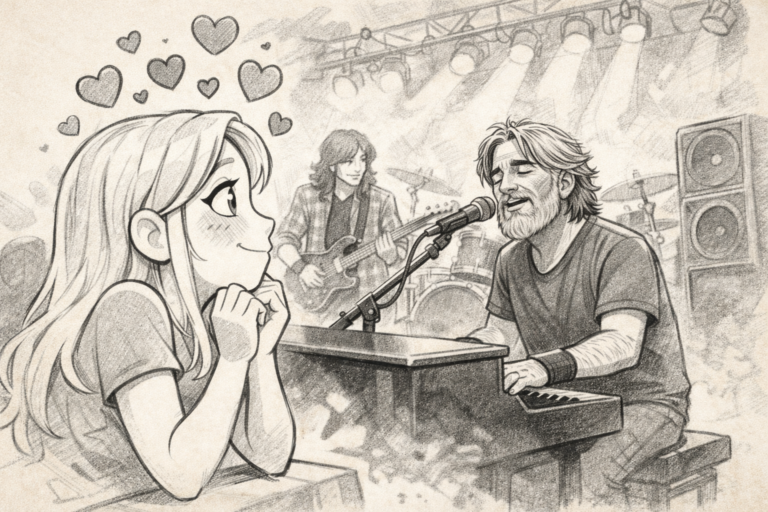
In a vein of hope, for my own mental health and wellbeing, I’ve looked towards music as a beacon of light, a universal heartbeat and understanding regardless of culture and background.
It has spoken to my soul, helped me through endless heartache, and reminded me of many wonderful times and people.
In fact, there was a point in a gig I recently attended where all the worries and stress fell away like sugar dissolving in warm tea, and I felt like myself again – if only for a minute.
And to those music makers, I will be forever grateful.
Music creates a shared emotional experience. A song, painting, or performance can make people feel joy, grief, hope, or awe at the same time—even if they come from different backgrounds. Feeling something together builds connection and links to events and people who have moved past us like horses flashing into the night.
Music acts as a universal language. Rhythm, melody, colour, movement, and imagery can be understood without words, transcending prejudice and misunderstanding.
This allows people to communicate meaning and emotion across cultures, generations, and histories.
Music can be inclusive to those who can’t hear. Having personal experience myself, people with hearing impairment still feel bass when they place their hands on speakers, subwoofers, and resonant surfaces. Ever felt music vibrate through your feet? This tactile experience invites you into a sensory world that transcends traditional sound. Still, there are limits. Even when you can feel the beat, the vibrations are simple and lack detail. Thankfully, technology is helping bridge this gap. Devices like vibration vests, wristbands, or backpacks translate music into vibrations. In addition, sign-language performances add expressive, visual storytelling to songs, further enhancing the inclusivity of music for everyone.
Being deaf also doesn’t mean you can’t appreciate musical storytelling and lyrics.
An example of this is found in the 1986 film, Children of a Lesser God.
Could music allow us to groove past hate, mistrust, and even racism?
Importantly, music can challenge harmful narratives.
Think about:
And there are legions more that my ignorance and the space in this post fail to accommodate. Music, as with all art, needs to transcend and criticise political stagnation as much as it has a role in our happiness and joy.
Lyrics can confront injustice, call out racism, and imagine more inclusive futures. Even without words, music rooted in different cultures encourages appreciation rather than fear of difference.
Music opens hearts; people and systems must follow through. But by reminding us of our shared humanity, music can be a powerful bridge—one that makes understanding and reconciliation possible.
Broadening your taste in music from rap to classical also allows us to experience different cultures.
Not doing so is like walking into a house where all the walls are magnolia.
As diversity in everyday life encourages harmony, creativity and empathy, diversity in music helps us understand diverse histories, struggles, and celebrations.
Global music festivals celebrate our innate ability as human beings to come together, as if emerging from a primordial glue, feeling the pulse and joy in all our music.
So, how diverse is your musical taste?
Do you strike all the right notes?
Play our intro quiz below and get your own musical rating.
I hope my take for the Hot Topic this January gives you hope for next year and a chance to look toward the future, not the past. For your own mental health, try to adopt a positive or growth mindset.
Finally, I hope you listen to a variety of music this year. Remember, music reminds us of our shared humanity. Creating and responding to art reflects a deeply human impulse—to make meaning, express emotion, and connect.
When we engage with music and art, we recognise that others feel, struggle, and hope just as we do.
Discussion Points for Safeguarding, Health and Wellbeing, Rule of Law and Equality and Diversity:
- How can broadening your musical taste link to an understanding of diversity and empathy with others?
- Why is it important to safeguard yours and other’s mental health?
- Is it important that creative industries are protected from monopolisation and profit?